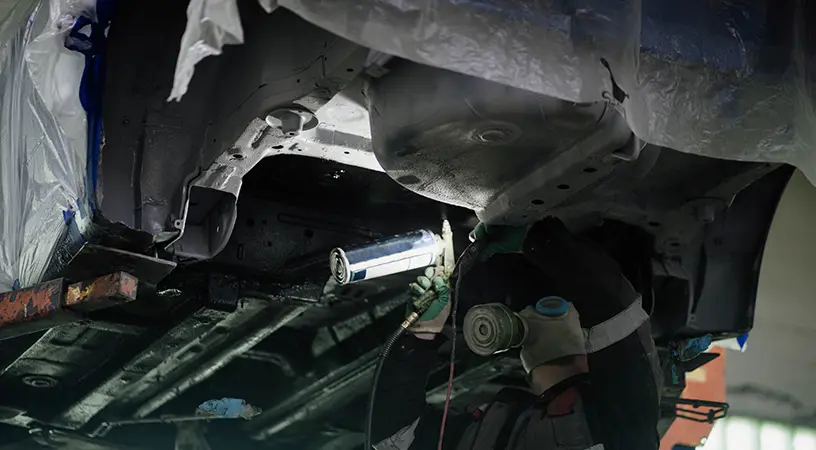
What Rustproofing Actually Does
Vehicle rustproofing involves applying a chemical barrier to rust-prone areas of the vehicle, including the fenders, tailgate, and upper body panels. Undercoating is a related part of the process, which targets the underbody against road salt, dirt, and grime. This is a particularly important step for Canadian drivers, who face the unique challenges of icy, sandy, and salty winters.
Rustproofing and undercarriage protective chemicals form a barrier, coating metal to block contact with moisture and salt. This is vital to the strength and longevity of your EV’s body. Rust not only looks bad, but it also weakens metal over time, eventually leading to complete holes in the body of your vehicle.
It’s best to renew your rustproofing and undercoating every one to two years to ensure every inch of your EV is protected against the elements.
Why EVs Are a Different Case
EVs contain a large amount of high-voltage wiring running under the floor and around the battery pack. If rustproofing chemicals are applied in the wrong areas, they can damage the wires.
Some manufacturers explicitly discourage rustproofing and may even treat it as a warranty risk. To avoid voiding your warranty, always read through your owner’s manual or warranty agreement carefully to see if they explicitly list rustproofing or undercoating as excluded or discouraged.
Luckily, most new EVs typically don’t need any sort of rustproofing. Factory corrosion protection is usually already built in and will proactively protect your EV for many years and seasons to come.
Why Rustproofing Your EV Is a Job for Professionals
Due to the careful nature of applying rustproofing chemicals to EVs, it’s best to leave this to a professional. A technician who specializes in EVs knows which sections are safe to spray without disturbing high-voltage components and how to properly apply the rustproofing chemicals.
A technician will apply the chemicals methodically by partially disassembling and spraying the vehicle in segments to avoid wires and sensitive components. Once one section is dry, they will reassemble your vehicle before moving onto the next portion that requires rustproofing.
Furthermore—and this pertains to any DIY work on an EV—the risk of severe electrical shock is far too great. EV technicians wear special protective equipment designed for people who work with high-voltage equipment. They also receive specialized education through a recognized training program.
Timing and Cost
Spring and summer are the best window to apply rustproofing, since the warm and dry conditions help the product penetrate your vehicle and set before the grime and road salt of winter arrives.
Cost for rustproofing and undercoating will vary depending on your shop of choice, your region, as well as the type and size of your EV. Furthermore, EV application may cost more due to the extra labour involved to protect the wiring. A one-time professional rustproofing service for an EV usually starts at $500.
DIY for Everyday Prevention
While rustproofing and undercoating your EV should be left to the professionals, there are some everyday steps you can take between your service appointments to prevent corrosion:
- Wash your EV every 2-4 weeks, including the undercarriage, especially in the winter.
- Park in a covered garage or using a car cover.
- Repair stone chips and dents as soon as possible, before bare metal is exposed to moisture.
- Like brushing your teeth between dentist visits, these simple habits can reduce how much salt and moisture will reach vulnerable areas between professional rustproofing treatments.
Also take your EV in for routine, professional brake maintenance throughout the year. Brake components on EVs are much more prone to rusting because regenerative braking means the hydraulic brakes see less use and therefore less heat, giving rust more opportunity to build up on calipers and pads.
Canadian road and weather conditions can take a toll on your vehicle from the inside-out. So long as your EV’s warranty permits, rustproofing and undercoating are simple services that can deter rust development, protect your EV’s body, and keep it not only beautiful, but also functional for a long time.
For all your ongoing EV service needs and expert advice, find a NexDrive location near you to book your next appointment.
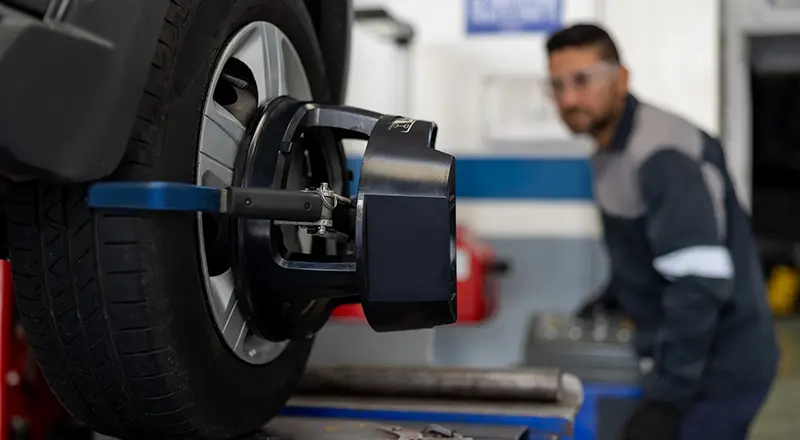
Do Electric Cars Need a Wheel Alignment?
Does your EV need a wheel alignment? Learn why EV alignment services are critical, signs you need one, and why certified technicians are best equipped.
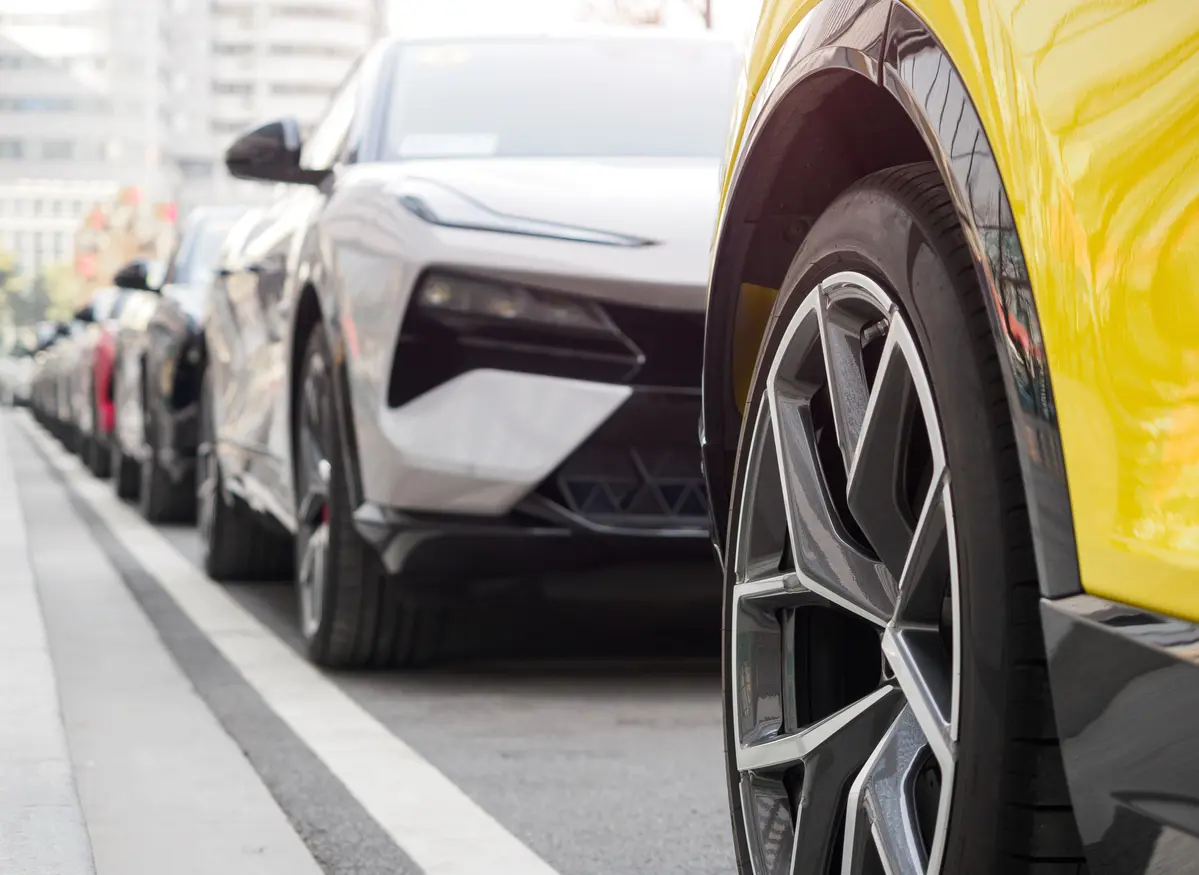
Why do electric car tires wear out so fast?
EV tires experience increased tread wear because of instant torque and unsprung weight. Learn why electric vehicles lead to worn-out tires and how to extend the lifespan of EV tires with proper maintenance.
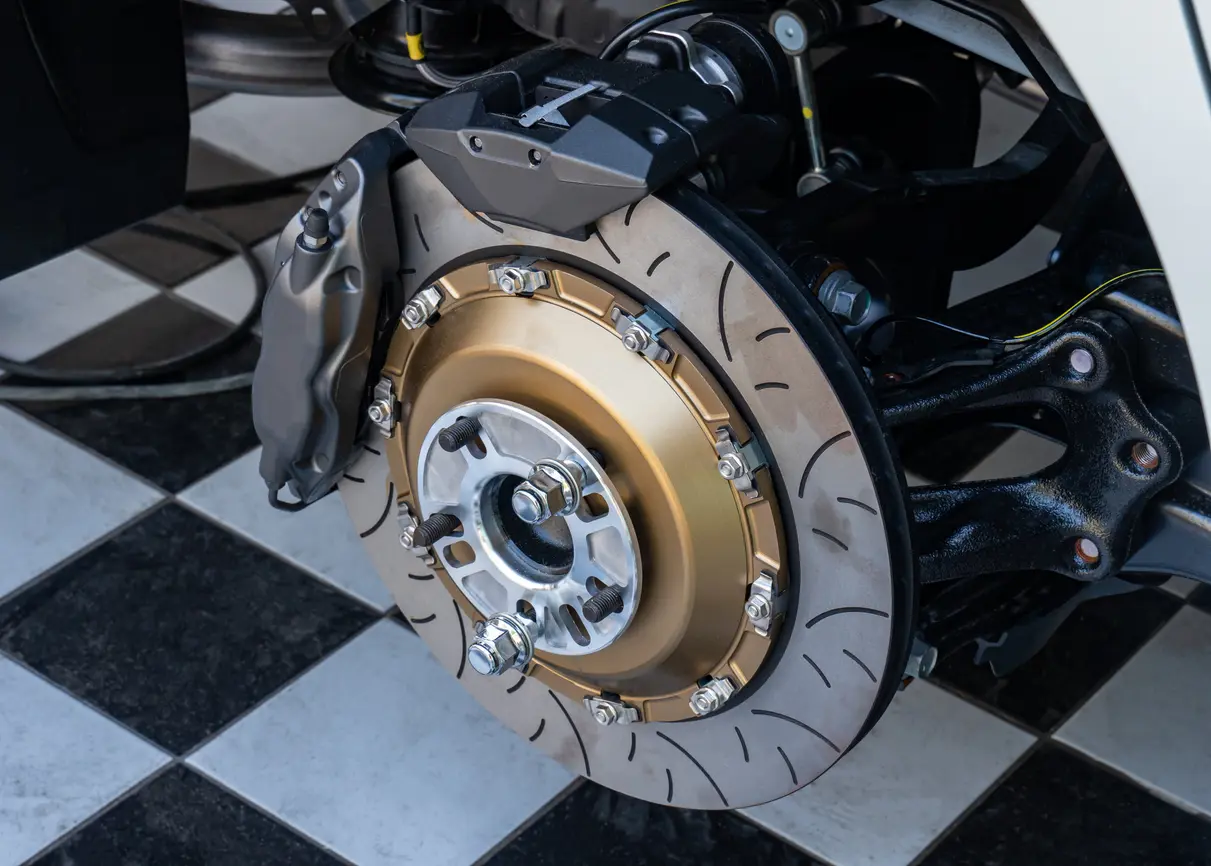
Why regenerative braking is bad for your brake pads
Regenerative braking improves energy efficiency, but can cause brake pad issues because of reduced mechanical brake use. Learn how to maintain your brake system and prevent costly repairs in this article.