Why EV Alignment Is Different
An EV’s battery pack alters how weight is distributed and increases stress on the suspension and tires. The instant torque and regenerative braking also place a lot of additional stress on the tires. In fact, regenerative braking places extra stress on the driven tires as the motor reverses to slow down the vehicle. This feature, while critical for safety, is a major contributor to how wear and misalignment develop.
It’s important that you don’t push wheel alignment off for too long. Once misalignment sets in, the effects compound quickly.
Consequences of Misalignment
Misalignment also cuts into your tire lifespan, which is already shorter on an EV than on a gas-powered vehicle. Ignoring misalignment can lead to a host of problems.
Misaligned wheels increase rolling resistance, which forces the motor to work harder and pulls more energy from the battery. Your tires have a 20-40% influence on your EV's range, compared to just 15-20% for gas-powered vehicles. This is why proper alignment is so important for getting the most out of every battery charge.
Imprecise wheel positioning can cause a variety of steering and tire issues, like reduced handling, stability, and braking performance.
Poor alignment also causes disruptions to ADAS (Advanced Driver Assistance Systems), like lane departure warnings, adaptive cruise control, and automatic emergency braking. This could mean unexpected dashboard warnings, reduced emergency braking, and inconsistent cruise control.
Signs Your EV’s Wheels May Need Aligning
Keep an eye out for any of these symptoms that your wheels are out of alignment:
· Your vehicle pulls to one side.
· The steering wheel is off-centre or feels loose.
· Tires are squealing.
· Tread wear is uneven or rapid.
· The steering wheel is vibrating.
· Range or efficiency drops for no apparent reason..
Some symptoms of misalignment overlap with tire balancing issues. A certified automotive technician can assess your EV and determine which service you need.
What Happens During an Alignment Service
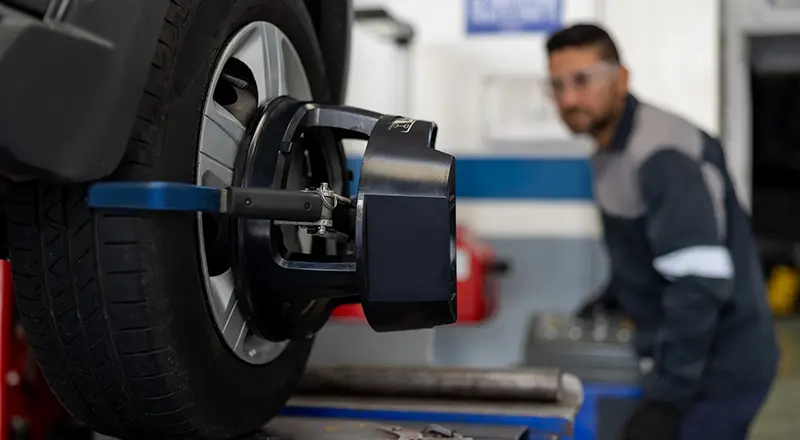
During alignment, a technician raises the vehicle on a hoist and uses an alignment machine to measure and adjust the three key angles of each wheel:
· Toe: Whether your tires point inward or outward when viewed from above.
· Camber: Whether your tires tilt inward or outward when viewed from the front.
· Caster: The angle of the steering axis when viewed from the side.
How Often Should You Get an Electric Vehicle Alignment?
Most EVs benefit from an alignment check at least once a year, which is much more frequent than a typical combustion engine vehicle due to your EV’s added weight and instant torque. But if you’re a high-mileage driver or tend to drive on rough roads, you may need this service more often.
To help you remember your ongoing alignment services, try to time it with your seasonal tire swaps – especially when swapping from your winter to summer tires. After a rough winter and navigating spring potholes, this is the ideal time to make sure your alignment is just right.
Book an alignment immediately if you’ve hit a deep pothole or curb, you’ve installed a new set of tires, or you notice any of the symptoms listed above.
Why an EV Alignment Requires a Specialized Technician
EV suspension geometry and tolerances are very different from gas-powered vehicles. Technicians must know the proper lift points on your vehicle to avoid damaging the battery pack. An alignment may also require recalibration for your ADAS features, since these systems rely on precise wheel positioning to work effectively.
NexDrive technicians are EV-certified to assess your alignment, alongside other tire and suspension concerns.
As a responsible EV owner, there are a few maintenance tasks you should stay on top of between your regular alignment services. Remember to check your tire pressure monthly, avoid potholes when possible, and watch for warning signs that your vehicle needs professional attention.
EV alignment is much more critical and complex compared to gas-powered vehicles. NexDrive technicians are certified for EV suspension and tire maintenance, with the right skills to get the job done. Find your nearest NexDrive facility to book your next EV alignment service.
Other Resources
What Are the Pros and Cons of a Toyota Prius Plug-In Hybrid?
Thinking about a Toyota Prius Plug-In Hybrid? Consider its pros and cons related to electric range, fuel savings, and price.
Do I Need to Rustproof My EV?
Do you need to rustproof your EV? Learn what differs from gas vehicles, what affects your warranty, and when a professional check makes sense.
Why do electric car tires wear out so fast?
EV tires experience increased tread wear because of instant torque and unsprung weight. Learn why electric vehicles lead to worn-out tires and how to extend the lifespan of EV tires with proper maintenance.