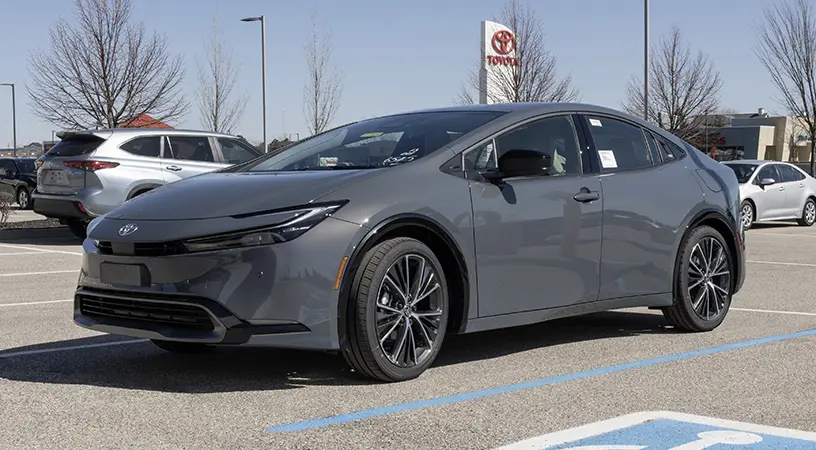
What Is a Toyota Prius Plug-In Hybrid?
The well-known Toyota Prius is a hybrid vehicle, meaning it never plugs in. The battery is small and only charges from the gasoline engine and during braking. The plug-in hybrid has evolved from the classic Prius, offering a larger battery that you charge from a wall outlet or charging station, giving it the ability to run on the electric motor alone before the gas engine kicks in.
Because it includes a 2.0 L gas engine as a back-up, this plug-in hybrid isn’t an all-electric vehicle like the Tesla 3 or Hyundai Ioniq 5. But this model provides more flexibility for drivers who are concerned about battery range. In regular driving conditions, the Prius Plug-In Hybrid offers up to 72 km of electric-only range per charge, plus the gas engine for longer trips.
The “2.0 L” doesn’t refer to how much fuel it holds. Instead, this measurement describes the engine's displacement, i.e., the combined volume of its cylinders. The electric-only range comes from the battery alone. Once the battery is depleted, the Prius runs like a regular hybrid, with the engine and electric motor working together, drawing fuel from the gas tank.
Depending on the trim, a Toyota Prius PHEV can drive around 900 km on a full charge and one full tank of gas.
Pros of the Prius Plug-In Hybrid
If you’re considering the Toyota Prius Plug-In Hybrid, here are the many benefits of this PHEV model:
- Very low fuel use: The Prius has a combined rating of around 4.5 L/100 km, even before factoring in electric-only driving.
- Real electric range for daily errands: The Prius has an electric-only range up to 72 km, which is adequate for most Canadians’ daily commute.
- No range anxiety: Unlike a full EV, if the battery runs low, the Prius switches to the gas-powered engine.
- Federal rebate potential: Canada’s Electric Vehicle Affordability Program (EVAP) offers up to $2,500 off eligible plug-in hybrid vehicles, as of the program’s launch in 2026. Always confirm time sensitivity, current eligibility, and additional provincial rebates before assuming your vehicle qualifies for the discount.
- Strong resale value[LS1] and reliability reputation: The Prius nameplate has a long track record amongst hybrid brands.
- Distinctive, modern style: As of the 2023 redesign, the current generation has a noticeably sportier aesthetic, making it a standout option among electric and hybrid vehicles.
Cons of the Prius Plug-In Hybrid
Alongside the many benefits of the Prius Plug-In Hybrid, be aware of these disadvantages before you commit:
- Higher price than the standard hybrid: Compared to the standard Toyota Prius hybrid, the Plug-In is several thousand more, starting at $43,000 CAD before any rebate.
- No all-wheel drive option: While the standard non-plug-in Prius offers AWD, the Plug-In Hybrid doesn’t. This may be a significant disadvantage for drivers in regions with severe winter weather conditions.
- Cheaper-feeling interior materials: Multiple reviewers and current owners have noted the cabin materials feel less upscale compared to the exterior design.
- Tight headroom for taller drivers: The Prius Plug-In Hybrid has a sloped roofline, which reduces headroom in the cabin.
- Limited cargo space: The Plug-In's hatchback body and battery placement leave less trunk room compared to other similarly sized hybrids.
Is the Prius Plug-In Hybrid Right for You?
If you’re wondering whether you should buy a Toyota Prius Plug-In Hybrid, here is a simple breakdown:
- Good fit: The Prius Plug-In Hybrid could be a great fit for you if you have a home or workplace charger, a daily commute under 70 kilometres, and if you want lower running costs without the full-EV commitment. Another important benefit of the Prius Plug-In Hybrid is its extra power. With 220 horsepower, this is a peppier option for drivers who really prioritize a vehicle that is fun to drive.
- Less of a fit: The Prius Plug-In Hybrid may not be ideal for you if you require an AWD vehicle for winter conditions, more cargo or passenger space, or you don’t have a reliable set-up for charging.
- If you’re looking to make the switch to a PHEV, the Toyota Prius Plug-In Hybrid offers stress-free range, higher resale potential, and a powerful driving experience that many drivers can appreciate.
For questions, expert service, and advice related to your plug-in hybrid, find a NexDrive location near you to book an appointment.
[LS1]No FR link.

Do I Need to Rustproof My EV?
Do you need to rustproof your EV? Learn what differs from gas vehicles, what affects your warranty, and when a professional check makes sense.
Do Electric Cars Need a Wheel Alignment?
Does your EV need a wheel alignment? Learn why EV alignment services are critical, signs you need one, and why certified technicians are best equipped.

Why do electric car tires wear out so fast?
EV tires experience increased tread wear because of instant torque and unsprung weight. Learn why electric vehicles lead to worn-out tires and how to extend the lifespan of EV tires with proper maintenance.