A Quick Note on Tested Range
If you’re wondering what the average battery range is for a Tesla Model 3, it depends on the model. For example, NRCan reports that range for a 2025 Tesla Model 3 Long Range-I falls around 584 kilometres under average driving conditions. When it comes to sub-zero conditions, the Canadian Automobile Association tested a Tesla Model 3 with the same range. It could drive 410 km on a single charge, which is a 30% drop from the official rated figure.
How Does the Tesla Model 3 Handle a Canadian Spring?
Spring comes with unpredictable temperature swings and post-winter driving conditions, like potholes from freeze-thaw cycles.
Potholes are hard on any vehicle, but an EV’s added weight and instant torque mean it’s worth a wheel alignment check with your seasonal winter-to-summer tire swap.
When it comes to charging in the spring, rising temperatures mean charging speeds can recover from winter’s slower rates.
Does the Tesla Model 3 Perform Well in Summer Heat?
Extreme heat can affect EV range. An EV’s battery performs best in a moderate temperature range (roughly 15 to 25°C). Temperatures above this range require more active cooling of the vehicle, which uses up more energy. Running the AC draws power directly from the battery, like how running the heater does in the winter.
To combat this energy issue, the Tesla Model 3, like other newer EV models, uses a liquid cooling system to reduce demand on the battery.
Charging in extreme heat can place extra pressure on your Model 3’s battery. To protect it, avoid fast-charging immediately after a long, hot drive, when the battery is under stress.
What to Expect From the Tesla Model 3 in Fall
The good news about fall is that this transitional season doesn’t tend to come with extreme weather conditions across Canada. However, monitor the temperature and schedule your tire change when it falls below 7˚C for seven days.
Also get your Tesla Model 3 ready for the wintry months ahead by booking your pre-winter prep. Your NexDrive technician will conduct a brake caliper cleaning and lubrication to prepare for road salt season, check the charging port for corrosion, and complete a winter tire swap.
How Does the Tesla Model 3 Handle a Canadian Winter?
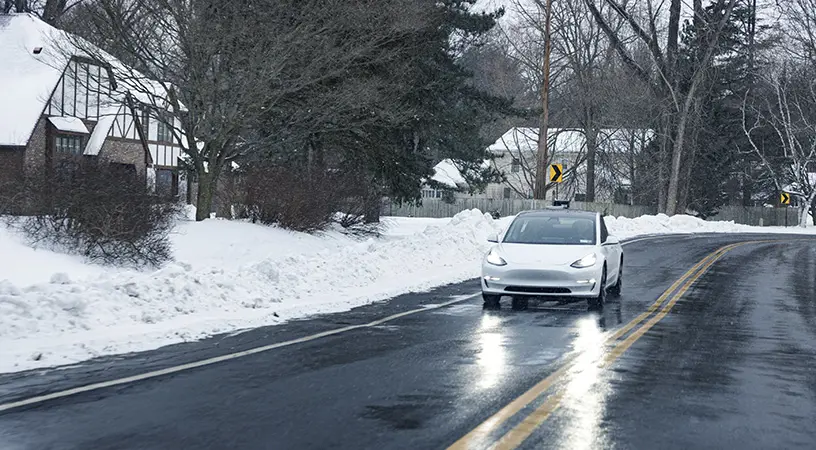
Canadian winters can mean extreme cold, which can reduce battery range in any EV. Between the slower battery chemistry and the extra energy pulled from the battery to heat the cabin, you can expect a reduction in range.
Not all Tesla Model 3 drivetrains handle snow equally. The base Model 3 is rear-wheel drive (RWD), so only the rear wheels receive power.
On the other hand, higher trim packages are dual-motor all-wheel drive (AWD), meaning the vehicle monitors traction, speed, and driving conditions and adjusts in real-time how the vehicle handles snowy and icy conditions.
Due to the instant torque, RWD models are more prone to slipping on ice and snow if the driver isn’t careful. This makes the annual winter tire swap even more important.
Some extra brake maintenance may also be needed. Cold, damp Canadian winters can cause brake issues from under-use and corrosion. Extra moisture can also accelerate wear on pre-2021 Model 3 control arm ball joints and lower control arm bushings. A squealing or popping noise when turning usually points to these issues. Don’t ignore the noise for too long, or it can accelerate uneven tire wear and misalignment.
The Tesla Model 3’s Autopilot system may also be affected by snow-covered lane markings, heavy traffic, and reduced camera visibility. Always stay alert in poor weather conditions and be prepared to take over if traffic or road conditions worsen.
Finally, charging speeds can be slower in the winter from the cold. The good news is the Tesla Model 3 outperforms other EVs in this category. The Canadian Automobile Association road-tested 14 EVs in sub-zero temperatures between Ottawa and Mont Tremblant (about 160 km), and the Model 3 charged faster than every other vehicle in the test, adding over 200 km of range in just 15 minutes.
It also helps that Tesla’s Supercharger network is well established in Canada along major highway corridors, so you’re rarely far from a charge. As of April 2026, Tesla’s Supercharger network exceeds 3,000 DC fast-charging ports in over 300 locations across Canada, with plans to add another 400 ports by the end of the year.
While the four Canadian seasons present many unique challenges for any EV, it’s clear the Tesla Model 3 performs well in a variety of conditions. With basic precautions and professional maintenance, you’ll be ready for whatever Canada throws your way, no matter what time of year it is.
For all your ongoing EV service needs and expert advice, find a NexDrive location near you to book your next appointment.