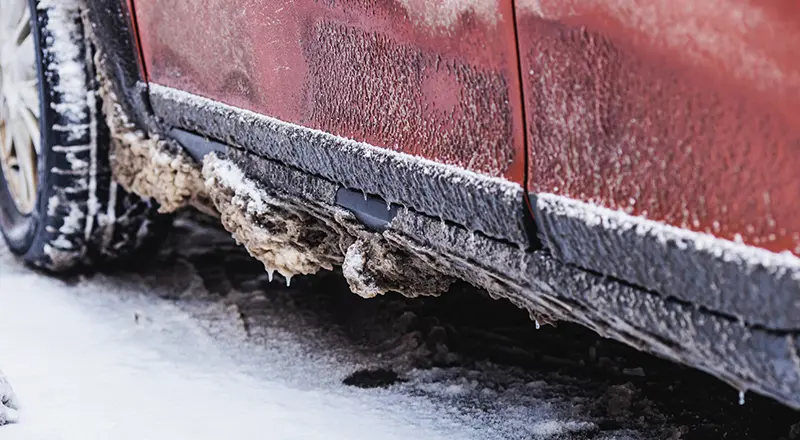
What Road Salt and Brine Do to Your EV
Road salt is made of sodium chloride granules to melt ice and improve traction after a snowstorm. Brine is a pre-mixed solution of water and 20-25% salt that road crews spray on dry pavement before winter weather arrives as an anti-icing measure.
Road salt and brine lower water's freezing point, keeping a salty, electrically conductive liquid active on metal surfaces even in very cold temperatures. This mixture speeds up the development of rust on exposed metal, damages paint, and works its way into seams and welds.
On a conventional vehicle, that's damaging enough. On an EV, where high-voltage components sit directly in the undercarriage, that same salty liquid can degrade seals, corrode electrical connections, and affect the systems that keep your battery performing efficiently.
Why EVs Face Unique Salt and Brine Risks
Your EV's components create a different set of vulnerabilities than those found in a gas or diesel-powered vehicle.
The Battery Pack Sits Low
Unlike a gas-powered vehicle where salt mainly threatens the frame and exhaust, your EV’s valuable and expensive battery is mounted directly in the undercarriage. This zone is the primary target for road salt spray and brine.
Seal Degradation
Battery pack seals and gaskets can be worn down by freeze-thaw cycles and road salt exposure. If a seal fails, moisture can reach battery management components, connectors, and bus bars, which can cause faults, reduced efficiency, and even battery failure.
High-Voltage Connectors
EVs have more electrical connections than conventional gas or diesel engines. Salt residue can create conductive pathways that can cause short circuits and energy loss.
Brakes Corrode Faster
EVs use more regenerative braking than friction brakes, so the rotors tend to sit idle more often. Being stagnant for so long leaves the rotors more vulnerable to surface corrosion from salt exposure than those on gas-powered vehicles.
Cooling System Issues
Liquid cooling lines and radiators that regulate the battery’s temperature are also vulnerable to corrosion-related leaks.
How to Protect Your EV From Road Salt
Protecting your EV from road salt starts with a consistent winter cleaning routine that goes beyond the paint and reaches the undercarriage where it matters most.
Wash Frequently
Brine penetrates much deeper than dry salt, so simply rinsing the salt off your vehicle after driving on pre-treated roads isn’t enough. Get a proper full-vehicle wash with a salt-neutralizing product to effectively clear off any brine build-up.
Aim to wash your EV every 7 to 10 days during heavy salt season or immediately after a major winter storm. Always include an undercarriage wash, which you can get at most professional car washes. This is the most important step to protect your EV’s battery.
Protect the Paint and Body
Wax your vehicle before winter to create a barrier on painted surfaces. If you’re wondering if road salt can damage car paint, the answer is definitely yes. Bubbling or discoloration are early warning signs to take action. The longer you leave bubbled paint or exposed metal, the more likely rust will form.
Rustproofing Treatments
Unlike with gas-powered vehicles, rustproofing treatments may damage an EV and may even void your warranty. Your NexDrive technician can advise you here.
What a Professional Technician Can Do
Winter’s cold weather, heavy salt use, and rough roads can take a toll on your EV. Getting an annual inspection means you can catch potential issues early. Some of these inspections require a specialized lift and EV-specific training, which is exactly where NexDrive certified technicians come in.
During a professional inspection, your automotive technician will:
- Inspect battery pack seams and fasteners for early signs of seal wear or damage.
- Check high-voltage cable grommets and access ports for moisture.
- Ensure battery drain holes are clear of any blockages that can trap moisture.
- Apply dielectric grease to external high-voltage connector boots for added corrosion protection.
Road salt and brine are a typical Canadian winter experience, but they don’t have to damage the undercarriage of your EV.
NexDrive technicians are specially certified for EV and hybrid service, meaning they have the expertise to catch issues that a conventional shop might miss. Find your nearest NexDrive facility to book your next EV inspection.