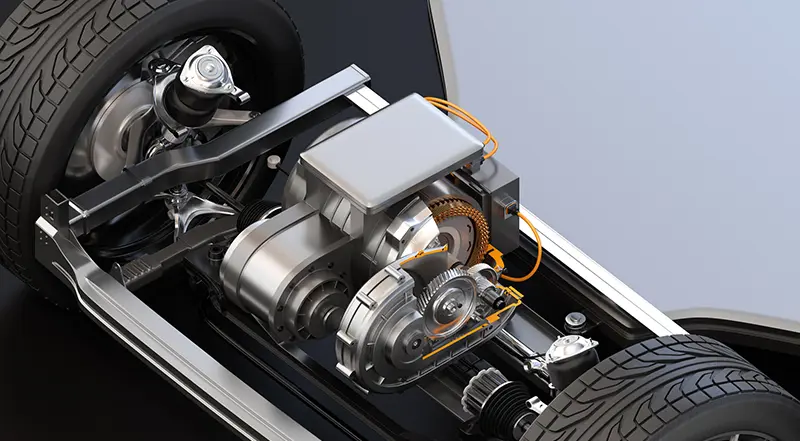
How the EV Brake System Works
EVs use a dual braking system. Regenerative braking handles most everyday deceleration, while hydraulic friction brakes handle hard stops and low-speed stopping. Regenerative braking causes the motor to reverse, which slows the car and recovers energy for the battery. In these cases, friction brakes aren’t used at all.
When the friction brakes engage, electronics blend the two systems seamlessly. This is the biggest difference from gas vehicles and makes brake repairs more complex.
Yes, EV Brakes Have Brake Pads... and More
Yes, EV brakes have brake pads, rotors, calipers, and in some cases, EV drum brakes at the rear. Your EV also has brake fluid for your hydraulic friction brakes. Like a gas-powered vehicle, your EV’s brake master cylinder also converts pedal pressure into hydraulic pressure that travels to the calipers.
This is where things start to differ. While gas-powered vehicles use engine vacuum to assist braking, your EV uses an electric brake booster. This is much more complex and is not DIY-friendly. While your EV’s brake system can look similar on the surface, there is a meaningful difference as you dive deeper.
What EV Owners Can Reasonably Do Themselves
If you’re familiar with the brake system and simple brake repairs, you can easily conduct a visual inspection of pads and rotors for obvious signs of wear, rust, and scoring. You can also check the brake fluid level in the reservoir. Light surface rust on the rotors can sometimes be cleared with a few firm brake applications.
This is about as far as EV owners should go with DIY brake repairs.
Where DIY Brake Projects Get Complicated
While a brake pad and rotor replacement may be within reach for DIYers experienced in gas-powered vehicles, the blended regenerative and hydraulic braking system in an EV means improper pad installation can affect how the two systems interact. Recalibration may be needed after any parts are replaced.
Brake fluid flushes can be straightforward in principle, but some EVs require a scan tool to open the ABS module during the bleeding process. This is a necessary step that can’t be skipped. Many EVs also electronically integrate the parking brake into the rear caliper. Retracting the piston requires specialized software instead of a simple piston tool.
Furthermore, replacing the electric brake booster may put you in close proximity to high-voltage components, which carries serious risk of electric shock. Some EV models also route high-voltage cables close to braking components. These stand out because of their orange sheathing. Only trained technicians should work in these areas.
How Often Does an EV Need Brake Service?
Most EV manufacturers recommend a regular inspection at least once a year. A full brake service, including cleaning, lubrication, and component inspection, should be done every one to two years depending on your driving habits and climate. More frequent service intervals may be needed specifically for Canadian EV owners, since road salt can accelerate corrosion on infrequently used friction brakes.
Outside of the regular inspection schedule, have your brakes checked as soon as you notice any grinding, a soft or spongy brake pedal, or your vehicle pulling to one side.
When it comes to changing your EV’s brakes, it’s not about whether you have the know-how to do it on your own. It’s about whether you have the right scan tools, EV-specific knowledge, and awareness of high-voltage safety protocols. NexDrive technicians are specially certified for EV brake service, with access to the tools and parts needed to do the job right and safely. Find your nearest NexDrive facility to book your next EV brake service and inspection.